
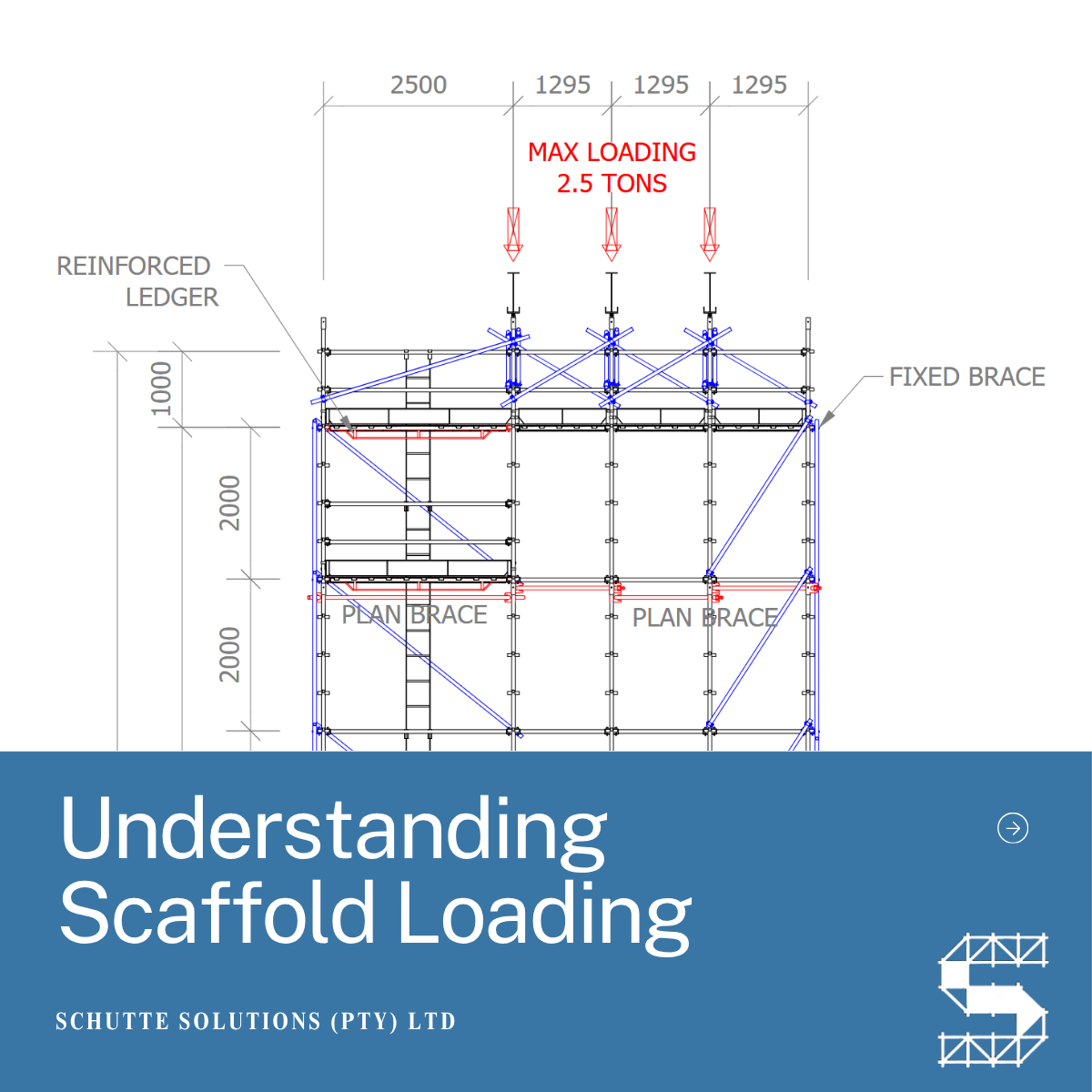
When planning a scaffold, one of the most important considerations is its loading capacity. Every scaffold is designed to safely support a specific amount of weight, and exceeding that capacity can lead to excessive deflection, instability, or even structural failure.
Unfortunately, scaffold loading is often misunderstood. Many people assume that if a scaffold "looks strong enough," it will safely support additional materials or workers. In reality, scaffold loading is a carefully engineered calculation based on multiple factors and is a fundamental requirement of SANS 10085-1:2024.
At Schutte Solutions, we design scaffolds that are engineered to safely support the intended loads while complying with South African standards.
What Is Scaffold Loading?
Scaffold loading refers to the total weight that the scaffold is expected to carry during its intended use.
This includes much more than just the workers standing on the platform. The total design load typically includes:
-
Workers
-
Tools
-
Construction materials
-
Equipment
-
Stored materials
-
The weight of the scaffold itself
-
Environmental loads, such as wind where applicable
Every one of these loads must be considered during the design process.
Why Loading Is So Important
Incorrect loading is one of the leading causes of scaffold failures.
When a scaffold is overloaded, several problems can occur:
-
Standards and ledgers become overstressed.
-
Decking may deflect excessively.
-
Base jacks can become overloaded.
-
Tie forces increase.
-
Foundations may settle unevenly.
-
The overall stability of the scaffold is reduced.
Even if the scaffold does not collapse immediately, overloading can weaken components and create hidden safety risks.
A properly designed scaffold ensures that every component is working within its allowable capacity.
Different Types of Loads
Understanding scaffold loading starts with recognising the different types of loads acting on the structure.
Dead Loads
Dead loads are the permanent loads that remain on the scaffold throughout its life.
These include:
-
Scaffold tubes or Kwikstage components
-
Decking
-
Guardrails
-
Toe boards
-
Stair units
-
Access systems
These loads are always included in the engineering calculations.
Live Loads
Live loads are temporary loads that change during the project.
Examples include:
-
Workers
-
Hand tools
-
Building materials
-
Buckets of concrete
-
Paint
-
Equipment
Live loads often vary throughout the day, making proper design essential.
Environmental Loads
External forces can also affect scaffold performance.
These may include:
-
Wind loading
-
Rainwater accumulation
-
Temporary sheeting or netting
-
Debris accumulation
Adding shade cloth or containment sheeting significantly increases wind forces and must always be considered during design.
Load Classes
Scaffolds are designed according to their intended use.
A scaffold intended only for inspection requires a much lower loading capacity than one supporting bricklayers or heavy equipment.
Typical examples include:
-
Inspection and access work
-
Painting
-
General maintenance
-
Mechanical installations
-
Heavy masonry work
The intended activity determines the required loading class and influences the entire scaffold design.
Why Materials Should Never Be Stockpiled Without Approval
A common mistake on construction sites is using scaffold platforms as storage areas.
For example:
-
Stacking bricks
-
Storing pallets of materials
-
Leaving heavy equipment on platforms
-
Concentrating loads in one area
Even when the total weight appears acceptable, concentrated loads can overload individual bays or components.
The scaffold may have been designed only for personnel and light materials, not for storage.
If additional storage is required, the scaffold should be redesigned before work begins.
How Engineers Design for Loading
Engineering calculations consider how every load travels through the scaffold.
The process typically includes evaluating:
-
Platform loads
-
Vertical load paths
-
Standard capacities
-
Ledger and transom capacities
-
Foundation reactions
-
Tie forces
-
Overall stability
-
Bracing requirements
Modern design software allows engineers to model these loads accurately, ensuring compliance with the relevant standards.
Site Changes Can Affect Loading
One important point is that scaffold loading is based on the original design assumptions.
During construction, changes often occur.
Examples include:
-
Additional platforms added
-
Extra materials stored
-
Hoists installed
-
Scaffold sheeting added
-
Different work activities introduced
Any of these changes can alter the loading conditions.
Before modifying the scaffold, the design should always be reviewed to ensure it remains safe.
The Importance of Communication
Contractors, supervisors and scaffold users all play a role in maintaining safe loading practices.
Everyone should understand:
-
The intended use of the scaffold.
-
Whether materials may be stored.
-
The maximum working load.
-
When engineering approval is required for changes.
Clear communication helps prevent unsafe modifications and accidental overloading.
Designing for Safety
At Schutte Solutions, every scaffold design begins with understanding how the scaffold will actually be used.
Rather than simply producing drawings, we work with contractors to determine:
-
The type of work being carried out.
-
Expected material loads.
-
Access requirements.
-
Environmental conditions.
-
Any unusual loading scenarios.
This allows us to produce practical scaffold designs that comply with SANS 10085-1:2024 while helping contractors work safely and efficiently.
Final Thoughts
Scaffold loading is far more than a number on a drawing. It is the foundation of a safe scaffold design.
Understanding what loads the scaffold will carry-and ensuring it is designed accordingly-protects workers, reduces project risks, and helps contractors remain compliant with South African standards.
Whether the scaffold is for routine maintenance or a complex industrial project, proper loading calculations are essential for safety.
Need assistance with scaffold design or engineering sign-off? Schutte Solutions provides professional Kwikstage scaffold design and engineering services in accordance with SANS 10085-1:2024. Contact us today to discuss your next project.